Positive Volume Index (PVI)
Il Positive Volume Index (PVI), inventato da Paul L. Dysart Jr. negli anni '30 e adattato da Norman G. Fosback negli anni '70, è un indicatore di tendenza che accumula le percentuali di variazione dei prezzi dalle barre in cui il volume aumenta, ignorando le variazioni dalle barre in cui il volume diminuisce.
La logica alla base del PVI e del suo omologo, l'indice di volume negativo (NVI), si basa sul presupposto che la maggior parte degli operatori di mercato effettua operazioni durante i periodi di volume elevato, mentre un gruppo più ristretto di investitori più informati, talvolta denominati “smart money”, è più attivo durante i periodi di volume ridotto.
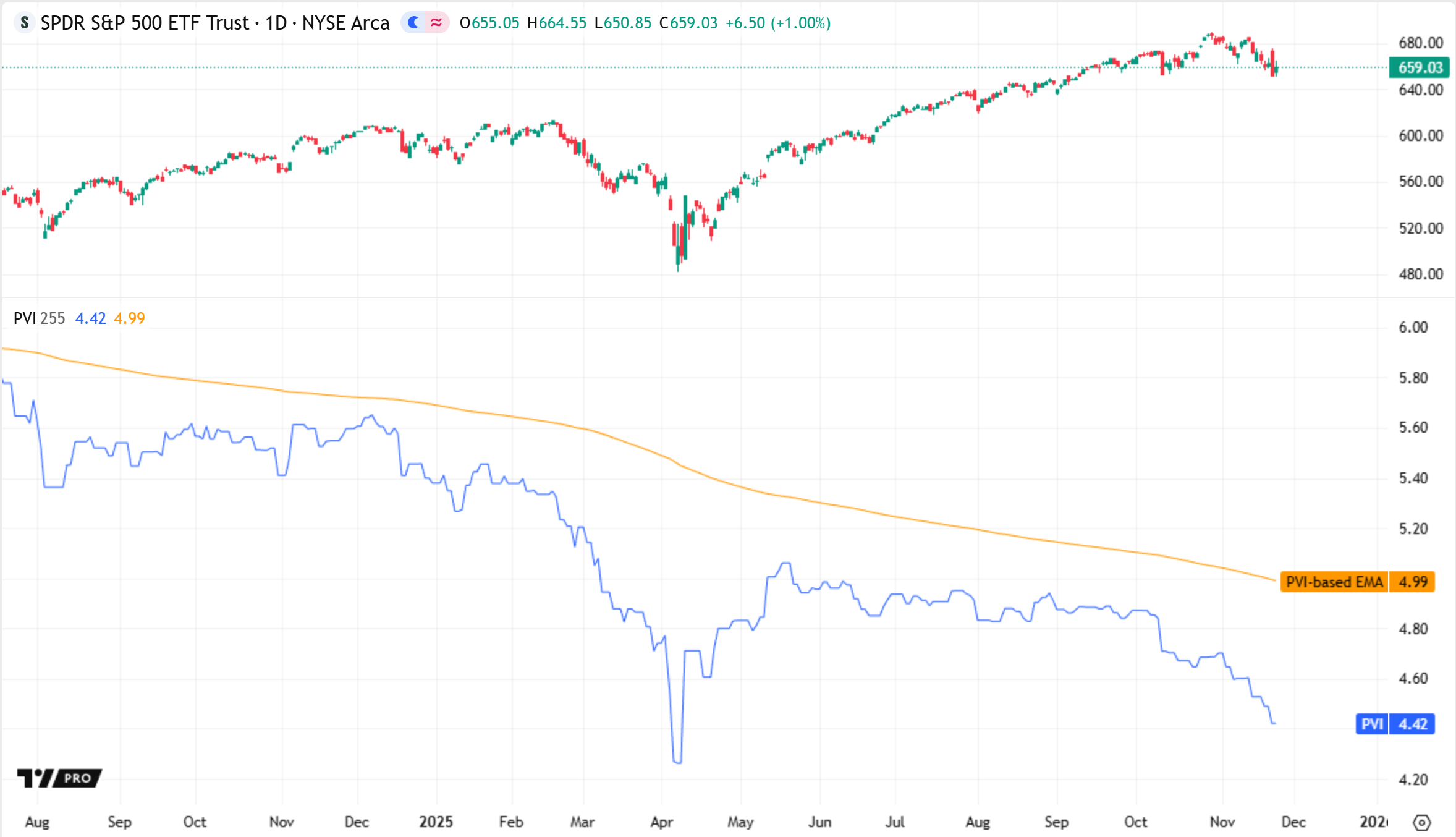
I trader analizzano spesso il PVI, insieme a una media mobile, sugli indici di mercato per identificare le tendenze a breve termine e lo slancio sulla base dei movimenti di prezzo che si verificano con l'aumento del volume.
Calcolo
Il PVI originale di Paul Dysart era un indicatore dell'attività generale del mercato. Accumulava gli avanzamenti netti nel mercato solo nei giorni in cui il volume aumentava rispetto al giorno precedente. Norman Fosback ha adattato il concetto per applicare un indice di volume positivo a qualsiasi indice di mercato con dati sul volume. Invece di utilizzare avanzamenti e cali, la versione del PVI di Fosback accumula le variazioni percentuali di prezzo. Il calcolo è il seguente:
- Impostare il valore iniziale del PVI. Il valore definisce la scala del PVI, ma non influisce sul comportamento dell'indicatore. I valori iniziali più comuni sono 1000, 100 e 1. Questo indicatore utilizza 1000.
- Se il volume sulla barra corrente è maggiore di quello della barra precedente, aggiungere la percentuale di variazione corrente dei prezzi di chiusura al valore PVI precedente.
- Se il volume sulla barra corrente è inferiore o uguale a quello della barra precedente, non aggiungere la percentuale di variazione della barra al PVI.
Il risultato è una serie cumulativa che si aggiorna solo sulle barre con volume più elevato, fornendo potenziali indicazioni su come si comportano i mercati all'aumentare dell'attività di trading complessiva. Fosback ha ricavato i segnali di trading confrontando il PVI con una media mobile di un anno. Il PVI che tende al di sopra della media suggerisce uno slancio al rialzo e il possibile inizio di un trend rialzista, mentre un valore al di sotto della media suggerisce il contrario.
Il PVI è destinato principalmente all'analisi dell'attività di mercato sui principali indici di mercato, ma è possibile applicare questo indicatore a qualsiasi grafico che disponga di dati sul volume.
Input
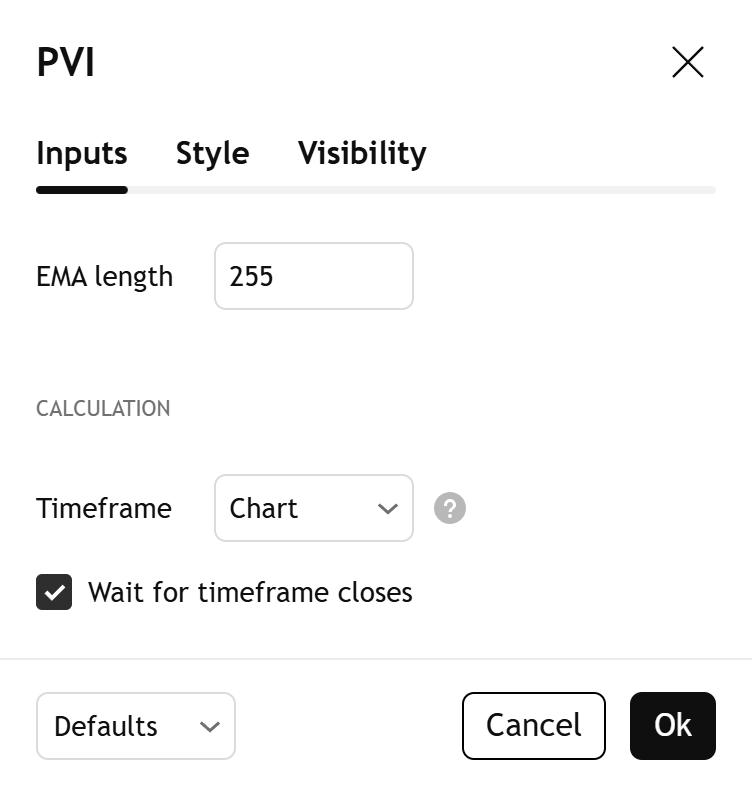
Periodo EMA
Il periodo del fattore di smoothing della media mobile esponenziale (EMA) basata sul PVI. Il valore predefinito è 255, che corrisponde approssimativamente a un anno su un grafico azionario giornaliero.
Timeframe
Imposta il timeframe che l'indicatore utilizza per i suoi calcoli. La casella di controllo “Attendi chiusura timeframe” sottostante determina se l'indicatore mostra i risultati solo quando una barra sul timeframe specificato si chiude. Per ulteriori informazioni, consulta l'articolo Sfrutta l'analisi multi-timeframe.