Technical Summary VWAP | RSI | VolatilityTechnical Summary VWAP | RSI | Volatility
The Quantum Trading Matrix is a multi-dimensional market-analysis dashboard designed as an educational and idea-generation tool to help traders read price structure, participation, momentum and volatility in one compact view. It is not an automated execution system; rather, it aggregates lightweight “quantum” signals — VWAP position, momentum oscillator behaviour, multi-EMA trend scoring, volume flow and institutional activity heuristics, market microstructure pivots and volatility measures — and synthesizes them into a single, transparent score and signal recommendation. The primary goal is to make explicit why a given market looks favourable or unfavourable by showing the individual ingredients and how they combine, enabling traders to learn, test and form rules based on observable market mechanics.
Each module of the matrix answers a distinct market question. VWAP and its percentage distance indicate whether the current price is trading above or below the intraday volume-weighted average — a proxy for intraday institutional control and value. The quantum momentum oscillator (fast and slow EMA difference scaled to percent) captures short-to-intermediate momentum shifts, providing a quickly responsive view of directional pressure. Multi-EMA trend scoring (8/21/50) produces a simple, transparent trend score by counting conditions such as price above EMAs and cross-EMAs ordering; this score is used to categorize market trend into descriptive buckets (e.g., STRONG UP, WEAK UP, NEUTRAL, DOWN). Volume analysis compares current volume to a recent moving average and computes a Z-score to detect spikes and unusual participation; additional buy/sell pressure heuristics (buyingPressure, sellingPressure, flowRatio) estimate whether upside or downside participation dominates the bar. Institutional activity is approximated by flagging large orders relative to volume baseline (e.g., volume > 2.5× MA) and estimating a dark pool proxy; this is a heuristic to highlight bars that likely had large players involved.
The dashboard also performs market-structure detection with small pivot windows to identify recent local support/resistance areas and computes price position relative to the daily high/low (dailyMid, pricePosition). Volatility is measured via ATR divided by price and bucketed into LOW/NORMAL/HIGH/EXTREME categories to help you adapt stop sizing and expectational horizons. Finally, all these pieces feed an interpretable scoring function that rewards alignment: VWAP above, strong flow ratio, bullish trend score, bullish momentum, and favorable RSI zone add to the overall score which is presented as a 0–100 metric and a colored emoji indicator for at-a-glance assessment.
The mashup is purposeful: each indicator covers a failure mode of the other. For example, momentum readings can be misleading during volatility spikes; VWAP informs whether institutions are on the bid or offer; volume Z-score detects abnormal participation that can validate a breakout; multi-EMA score mitigates single-EMA whipsaws by requiring a combination of price/EMA conditions. Combining these signals increases information content while keeping each component explainable — a key compliance requirement. The script intentionally emphasizes transparency: when it shows a BUY/SELL/HOLD recommendation, the dashboard shows the underlying sub-components so a trader can see whether VWAP, momentum, volume, trend or structure primarily drove the score.
For practical use, adopt a clear workflow: (1) check the matrix score and read the component tiles (VWAP position, momentum, trend and volume) to understand the drivers; (2) confirm market-structure support/resistance and pricePosition relative to the daily range; (3) require at least two corroborating components (for example, VWAP ABOVE + Momentum BULLISH or Volume spike + Trend STRONG UP) before considering entries; (4) use ATR-based stops or daily pivot distance for stop placement and size positions such that the trade risks a small, pre-defined percent of capital; (5) for intraday scalps shorten holding time and tighten stops, for swing trades increase lookback lengths and require multi-timeframe (higher TF) agreement. Treat the matrix as an idea filter and replay lab: when an alert triggers, replay the bars and observe which components anticipated the move and which lagged.
Parameter tuning matters. Shortening the momentum length makes the oscillator more sensitive (useful for scalping), while lengthening it reduces noise for swing contexts. Volume profile bars and MA length should match the instrument’s liquidity — increase the MA for low-liquidity stocks to reduce false institutional flags. The trend multiplier and signal sensitivity parameters let you calibrate how aggressively the matrix counts micro evidence into the score. Always backtest parameter sets across multiple periods and instruments; run walk-forward tests and keep a simple out-of-sample validation window to reduce overfitting risk.
Limitations and failure modes are explicit: institutional flags and dark-pool estimates are heuristics and cannot substitute for true tape or broker-level order flow; volume split by price range is an approximation and will not perfectly reflect signed volume; pivot detection with small windows may miss larger structural swings; VWAP is typically intraday-centric and less meaningful across multi-day swing contexts; the score is additive and may not capture non-linear relationships between features in extreme market regimes (e.g., flash crashes, circuit breaker events, or overnight gaps). The matrix is also susceptible to false signals during major news releases when price and volume behavior dislocate from typical patterns. Users should explicitly test behavior around earnings, macro data and low-liquidity periods.
To learn with the matrix, perform these experiments: (A) collect all BUY/SELL alerts over a 6-month period and measure median outcome at 5, 20 and 60 bars; (B) require additional gating conditions (e.g., only accept BUY when flowRatio>60 and trendScore≥4) and compare expectancy; (C) vary the institutional threshold (2×, 2.5×, 3× volumeMA) to see how many true positive spikes remain; (D) perform multi-instrument tests to ensure parameters are not tuned to a single ticker. Document every test and prefer robust, slightly lower returns with clearer logic rather than tuned “optimal” results that fail out of sample.
Originality statement: This script’s originality lies in the curated combination of intraday value (VWAP), multi-EMA trend scoring, momentum percent oscillator, volume Z-score plus buy/sell flow heuristics and a compact, interpretable scoring system. The script is not a simple indicator mashup; it is a didactic ensemble specifically designed to make internal rationale visible so traders can learn how each market characteristic contributes to actionable probability. The tool’s novelty is its emphasis on interpretability — showing the exact contributing signals behind a composite score — enabling reproducible testing and educational value.
Finally, for TradingView publication, include a clear description listing the modules, a short non-technical summary of how they interact, the tunable inputs, limitations and a risk disclaimer. Remove any promotional content or external contact links. If you used trademark symbols, either provide registration details or remove them. This transparent documentation satisfies TradingView’s requirement that mashups justify their composition and teach users how to use them.
Quantum Trading Matrix — multi-factor intraday dashboard (educational use only).
Purpose: Combines intraday VWAP position, a fast/slow EMA momentum percent oscillator, multi-EMA trend scoring (8/21/50), volume Z-score and buy/sell flow heuristics, pivot-based microstructure detection, and ATR-based volatility buckets to produce a transparent, componentized market score and trade-idea indicator. The mashup is intentional: VWAP identifies intraday value, momentum detects short bursts, EMAs provide structural trend bias, and volume/flow confirm participation. Signals require alignment of at least two components (for example, VWAP ABOVE + Momentum BULLISH + positive flow) for higher confidence.
Inputs: momentum period, volume MA/profile length, EMA configuration (8/21/50), trend multiplier, signal sensitivity, color and display options. Use shorter momentum lengths for scalps and longer for swing analysis. Increase volume MA for thinly traded instruments.
Limitations: Institutional/dark-pool estimates and flow heuristics are approximations, not actual exchange tape. VWAP is intraday-focused. Expect false signals during major news or low-liquidity sessions. Backtest and paper-trade before applying real capital.
Risk Disclaimer: For education and analysis only. Not financial advice. Use proper risk management. The author is not responsible for trading losses.
________________________________________
Risk & Misuse Disclaimer
This indicator is provided for education, analysis and idea generation only. It is not investment or financial advice and does not guarantee profits. Institutional activity flags, dark-pool estimates and flow heuristics are approximations and should not be treated as exchange tape. Backtest thoroughly and use demo/paper accounts before trading real capital. Always apply appropriate position sizing and stop-loss rules. The author is not responsible for any trading losses resulting from the use or misuse of this tool.
________________________________________
Risk Disclaimer: This tool is provided for education and analysis only. It is not financial advice and does not guarantee returns. Users assume all risk for trades made based on this script. Back test thoroughly and use proper risk management.
Indicatori di Bill Williams

Ajay Auto Pre-Market Gap + 3PM Signal (NIFTY/BANKNIFTY/SENSEX)Auto Pre-Market Gap + 3PM Signal (NIFTY/BANKNIFTY/SENSEX)


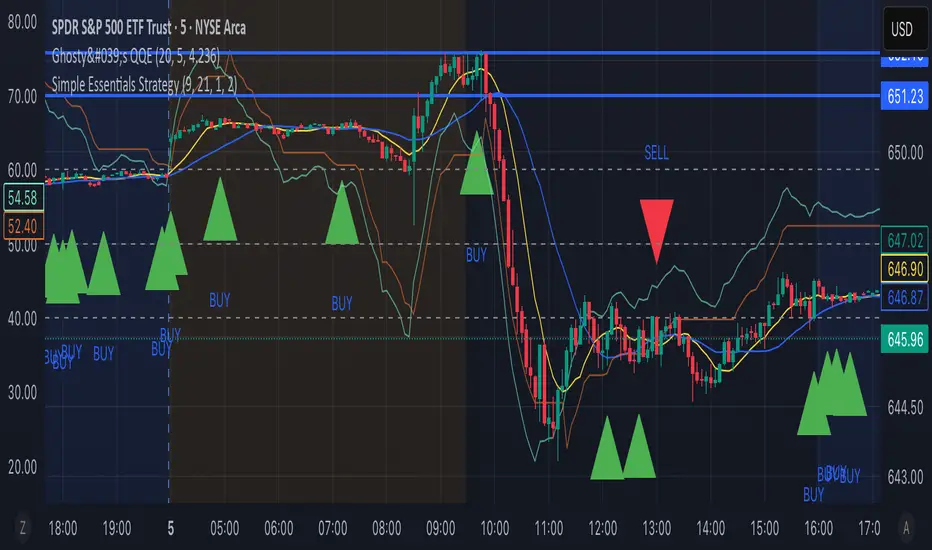
Nifty 50 Scalping - Bullish Buy & Bearish Sell (5 Target / 2 SL)Nifty 50 Scalping - Bullish Buy & Bearish Sell (5 Target / 2 SL)
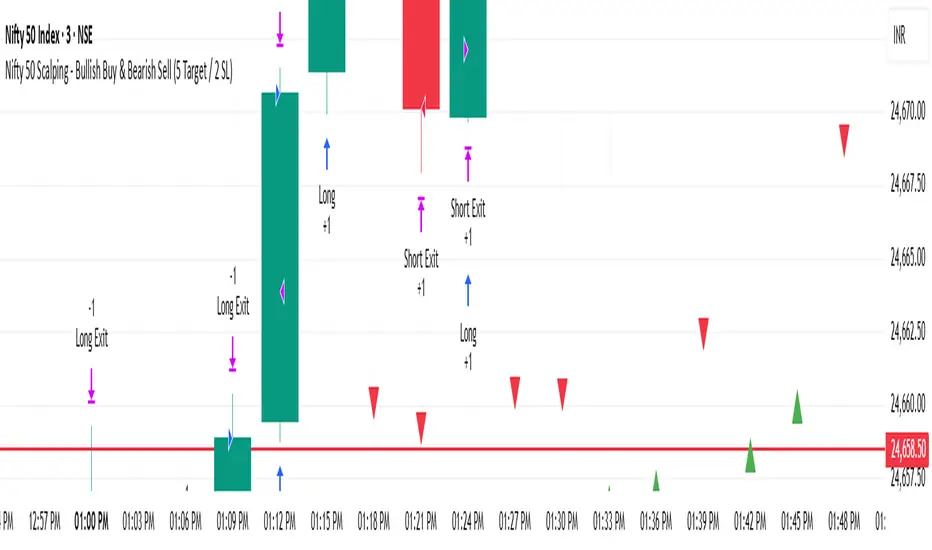
3 EMA TRONG 1 NTT CAPITALThe 3 EMA in 1 NTT CAPITAL indicator provides an overview of the market trend with three EMAs of different periods, helping to identify entry and exit points more accurately, thus supporting traders in making quick and effective decisions.
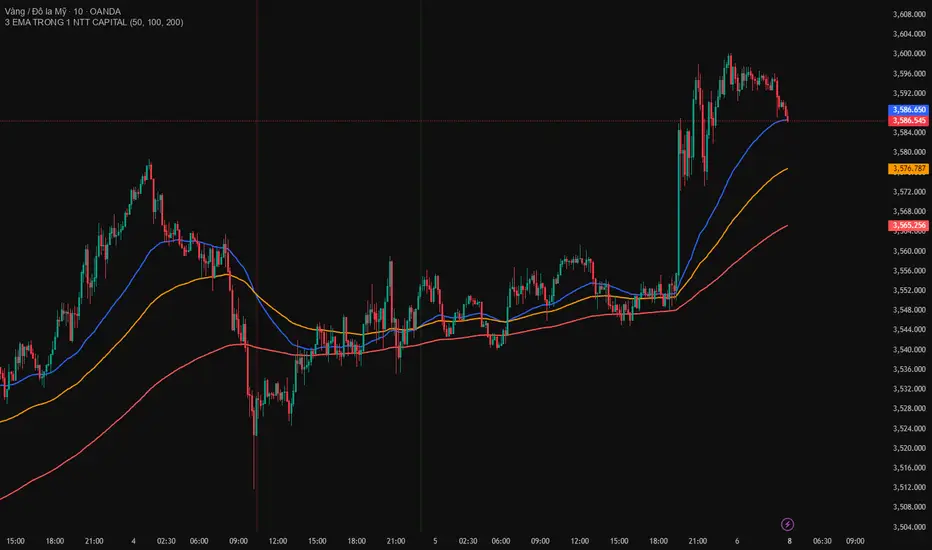

4 DU DINHSample Indicator Introduction (English)
Title:
Adaptive Trend & Momentum Indicator
Short Description:
An adaptive indicator that combines trend detection and momentum confirmation to help identify potential entry and exit points in various markets.
Full Description:
This indicator is designed to provide traders with a clear view of both trend direction and momentum strength. It dynamically adjusts to different market conditions, making it suitable for cryptocurrencies, stocks, and forex.
Main Features:
Trend Identification: Uses adaptive moving averages to detect bullish or bearish market phases.
Momentum Confirmation: Integrates oscillator-based signals to reduce false entries during sideways markets.
Customizable Inputs: Adjustable sensitivity, smoothing factors, and signal thresholds.
Non-repainting Logic: Signals are only confirmed after candle close to avoid misleading entries.
How to Use:
A bullish signal occurs when trend direction turns positive and momentum confirms.
A bearish signal occurs when trend direction turns negative with momentum confirmation.
Recommended for H1 and higher timeframes, but can be tuned for intraday strategies.
⚠️ Disclaimer: This indicator is for educational purposes only. It does not guarantee profits. Always combine with proper risk management and backtesting before trading live.

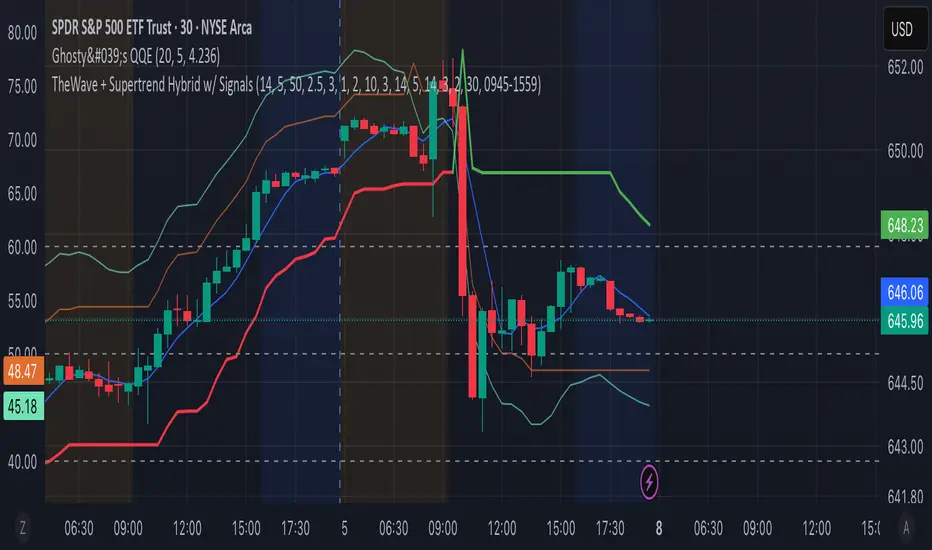
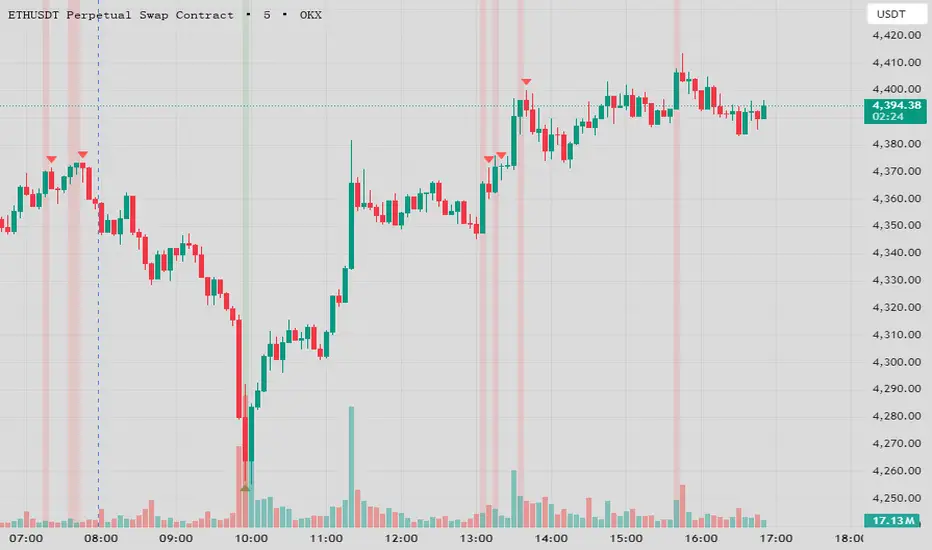
TheWave + Supertrend Hybrid w/ Signals• Green triangle below bar → Long entry signal
• Red triangle above bar → Short entry signal
• Small lime cross above/below → Take-profit hit
• Small maroon cross above/below → Stop-loss hit
• SMA5 and Supertrend lines for trend context
This version makes all entries and exits visually obvious while keeping the hybrid TheWave + Supertrend logic intact.
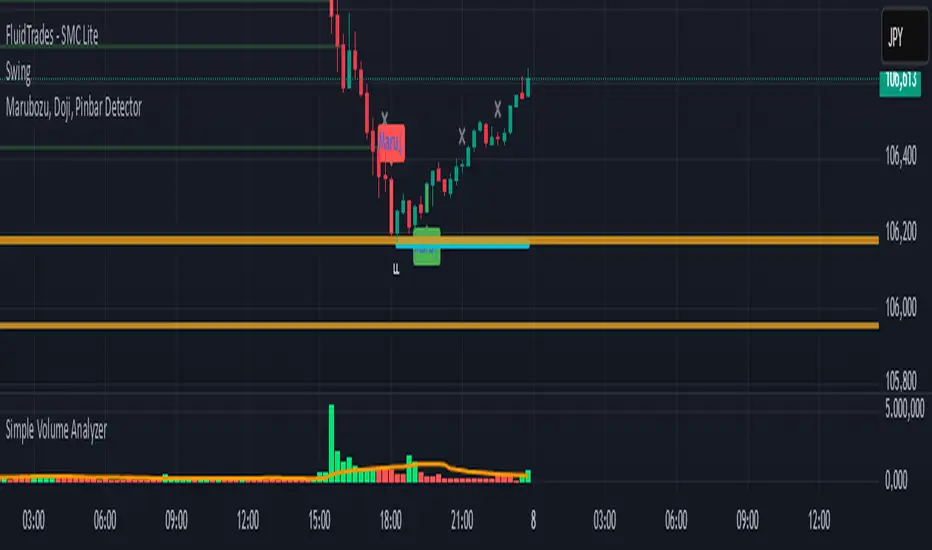
Simple Volume Analyzer..This is a simple yet powerful volume indicator that colors volume bars based on whether they are above or below a moving average. Useful for identifying breakouts and low-volume zones.

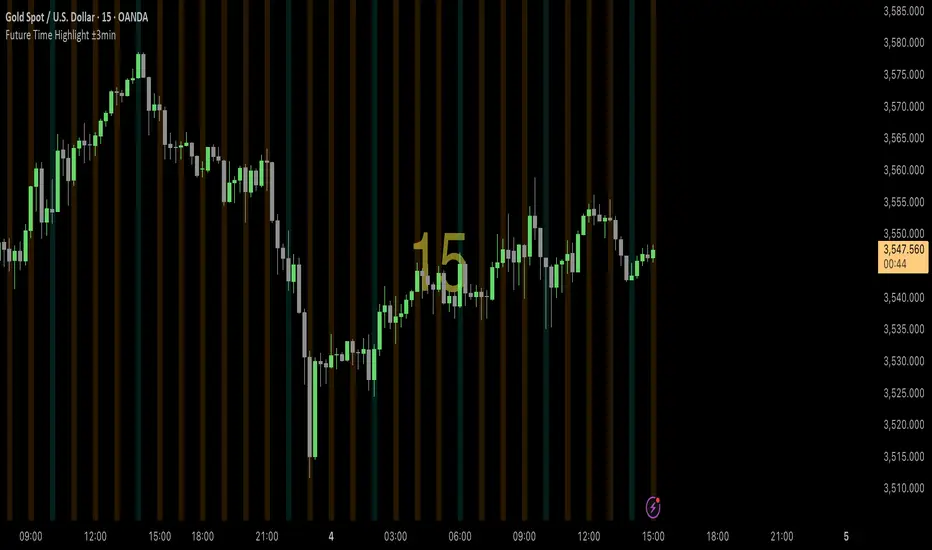
Cryptozen - Williams%R - Multi EMAsCryptozen - Williams%R - Multi EMAs
Combine le Williams%R avec plusieurs EMAs (100 50 30 13)

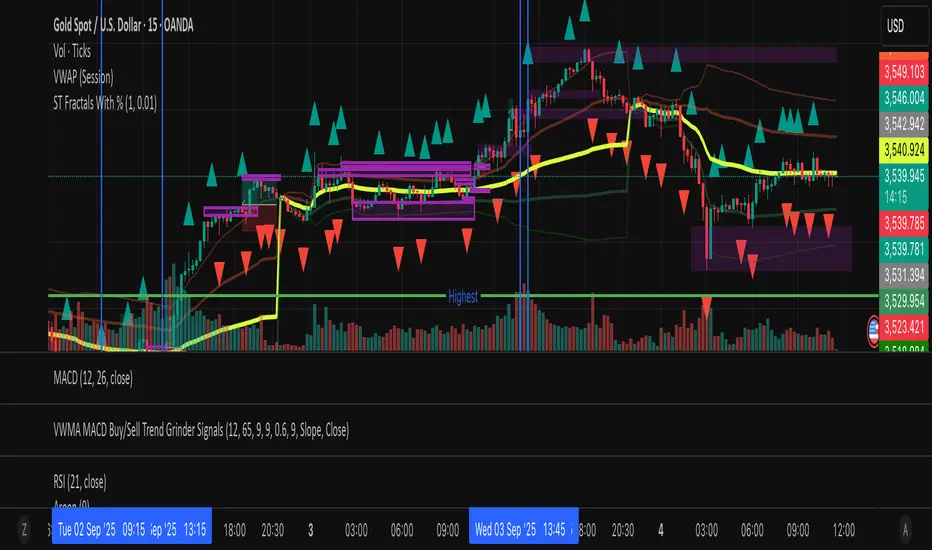
ST Fractals With Percentage DifferenceThis indicator identifies Williams Fractals on your price chart, helping traders spot potential reversal points and short-term highs and lows. This changes default value to 1 and adds percentage difference similar to ST Fractals option on MT5
How It Works:
Up Fractals (▲): Plotted above a candle that is higher than its surrounding candles — a potential short-term top.
Down Fractals (▼): Plotted below a candle that is lower than its surrounding candles — a potential short-term bottom.
Fractals are only drawn if the price difference from the next candle exceeds a minimum percentage, to avoid signals caused by small fluctuations.
The script ensures that both up and down fractals never appear on the same candle, keeping your chart clear.
Settings:
Periods (n): Determines how many candles before and after are considered to find a fractal. Default: 2.
Min % Difference: Filters out insignificant fractals by requiring a minimum difference from the next candle. Default: 0.01%.
Usage Tips:
Can be used to identify support and resistance levels.
Often combined with trend indicators or moving averages to confirm reversals.
Works best in markets with clear trends or volatility, rather than very flat markets.
Visuals:
Green triangle ▲ → Up Fractal (potential top)
Red triangle ▼ → Down Fractal (potential bottom)
Pullback Confirma**📈 Pullback Strategy with Candle Confirmation**
**🎯 Objective:**
Identify ideal entry points during pullbacks in trends, using the simultaneous crossover of two moving averages with candle confirmation.
**📊 Indicators Used:**
- **Hull Moving Average (HMA):** Period 27 - fast and smoothed average that reduces lag
- **Simple Moving Average (SMA):** Period 11 - short-term average for additional confirmation
**⚡ Strategy Logic:**
**🔹 Conditions for BUY SIGNAL:**
1. **Double Crossover:** Price crosses above both HMA 27 and SMA 11 simultaneously
2. **Pullback:** Price must be near or touching HMA 27 (return-to-average condition)
3. **Confirmation:** On the next candle, it must be a BULLISH candle closing above both averages
**🔸 Conditions for SELL SIGNAL:**
1. **Double Crossover:** Price crosses below both HMA 27 and SMA 11 simultaneously
2. **Pullback:** Price must be near or touching HMA 27
3. **Confirmation:** On the next candle, it must be a BEARISH candle closing below both averages
**🎨 Chart Visualization:**
- **● Blue Circle:** Upward crossover detected (awaiting confirmation)
- **● Orange Circle:** Downward crossover detected (awaiting confirmation)
- **▲ Green Arrow:** Confirmed buy (after confirmation candle)
- **▼ Red Arrow:** Confirmed sell (after confirmation candle)
- **Colored Lines:** HMA (blue) and SMA (orange) plotted on the chart
**⚙️ Customization:**
- Adjustable average periods
- Customizable arrow colors
- Configurable alerts for each confirmed signal
**✅ Advantages:**
- **Double Filter:** Two different averages for confirmation
- **Candle Confirmation:** Eliminates premature signals
- **Intuitive Visual:** Only shows arrows after valid confirmation
- **Controlled Pullback:** Operates only on return-to-average movements
**⏰ Recommended Timeframe:**
Works on multiple timeframes, but particularly effective on M15, H1, and H4 to capture more significant movements.
This strategy is ideal for traders looking for precise entries in consolidated trends, minimizing false signals through candle confirmation! 🚀

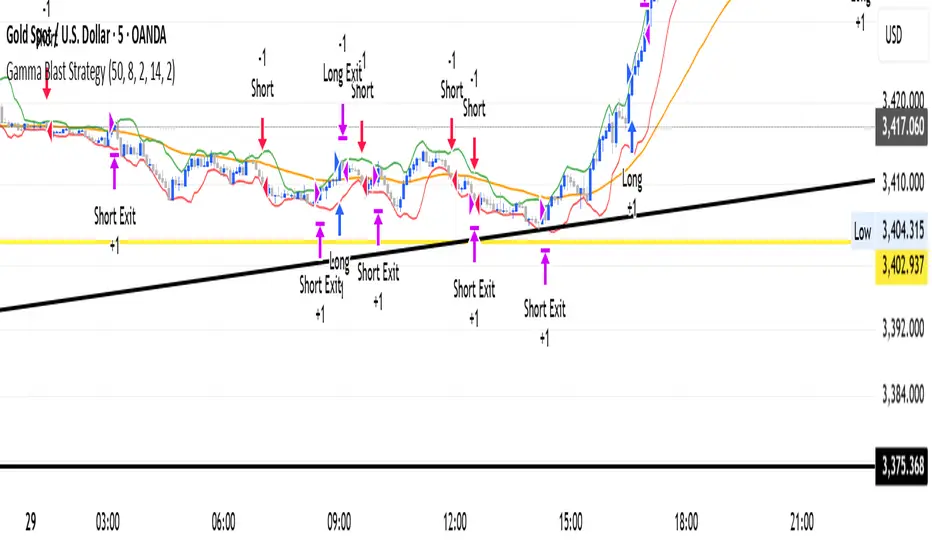
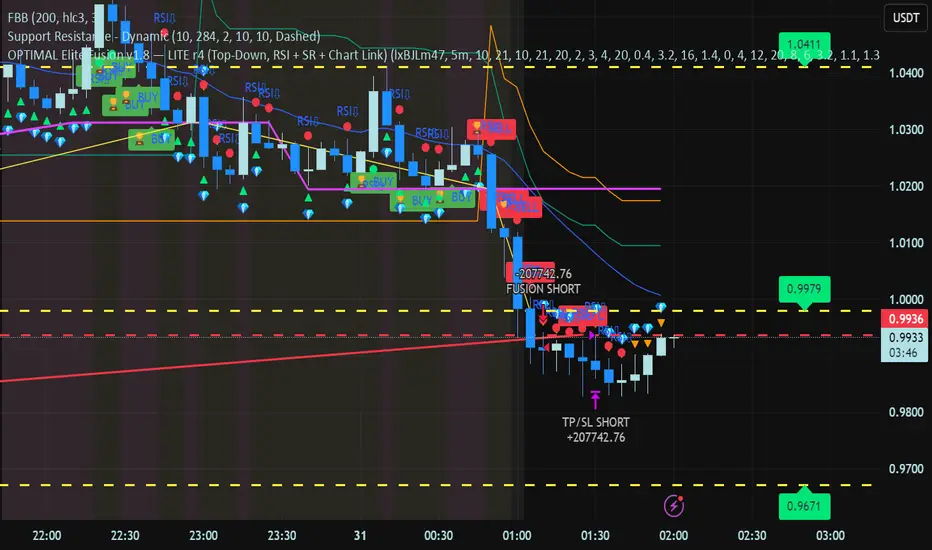
Gamma Blast StrategyGamma Blast Strategy used for quick 2-5 ticks on Buys, but on a sideways market can get up to 15-20 ticks.
OPTIMAL super trend tripple confirm for leverage. Ai implemented for higher r:r still a work in progresss
rsi jokerعندنا رسم بياني (شارت) على منصة TradingView.
واضح أنه شارت زمني قصير (ممكن M5 أو M15).
مرسوم عليه مستويات HH (Higher High), LL (Lower Low), HL (Higher Low), LH (Lower High).
الاتجاه الحالي:
من الرسم نلاحظ أن السعر عمل HH (قمة جديدة أعلى) ثم بعدها هبط بقوة وسجل LL (قاع جديد أقل).
بعد الـ LL، بدأ السعر يصعد لكن سجل LH (قمة أقل من السابقة)، مما يعني أن الاتجاه على المدى القريب يميل للهبوط (ترند هابط).
الخطوط المرسومة:
الخط الأحمر العلوي يمثل ترند هابط يربط القمم (مقاومة مائلة).
الخطوط الخضراء في الأسفل تمثل قناة سعرية هابطة أو دعم مائل.
الخط الأصفر يمثل خط اتجاه ثانوي/ضعيف داخل الترند.
المناطق المهمة:
المنطقة الحمراء بالأعلى: منطقة مقاومة قوية (إمداد/Supply Zone).
المنطقة الخضراء بالأسفل: منطقة دعم (طلب/Demand Zone).
الوضع الحالي للسعر:
السعر ارتد من الدعم (LL) وطلع لمستوى الترند الأحمر.
الآن يختبر المقاومة المائلة، ولو كسرها مع ثبات أعلى ممكن نشوف صعود للتجربة على المنطقة الحمراء.
لكن لو فشل بالكسر (رفض عند الترند)، ممكن يرجع للهبوط ويعيد اختبار المنطقة الخضراء.
📌 السيناريوهات المتوقعة:
صعود مشروط: إذا كسر الترند الأحمر + ثبات بشمعة واضحة → أهدافه المنطقة الحمراء (منطقة العرض).
هبوط مرجح: إذا فشل بالكسر → يرجع يعيد اختبار القاع السابق (LL) أو يكمل ضمن القناة الهابطة.
تحليل مختصر:
الاتجاه العام قصير المدى هابط، وأي صعود حالياً يعتبر تصحيح ما لم يكسر الترند العلوي والمنطقة الحمراء بثبات. Alright ✅ Let’s break this chart down in English:
General Structure:
This is a chart from TradingView on a short timeframe (likely M5 or M15).
It shows marked levels: HH (Higher High), LL (Lower Low), HL (Higher Low), LH (Lower High).
Trend Analysis:
Price created a Higher High (HH) but then dropped sharply to form a Lower Low (LL).
After the LL, price bounced but only managed to form a Lower High (LH) → this indicates a downtrend (bearish structure).
Drawn Lines:
Red descending line: main downtrend resistance (connecting lower highs).
Green lines below: channel support (downward sloping support zone).
Yellow line: minor/secondary trendline inside the main structure.
Key Zones:
Red zone (top): strong supply/resistance area.
Green zone (bottom): demand/support area.
Current Price Action:
Price bounced from the LL (support) and is now testing the red trendline (resistance).
If price breaks above and holds, it could push toward the red supply zone.
If price fails to break, it will likely drop back down, retesting the LL or sliding further inside the bearish channel.
📌 Scenarios:
Bullish case: Break + hold above the red trendline → target = red supply zone.
Bearish case (more likely): Rejection at the trendline → continuation downward to test LL or lower channel support.
🔎 Summary:
The short-term structure is bearish. Any upside move is just a correction unless price breaks above the trendline and supply zone.

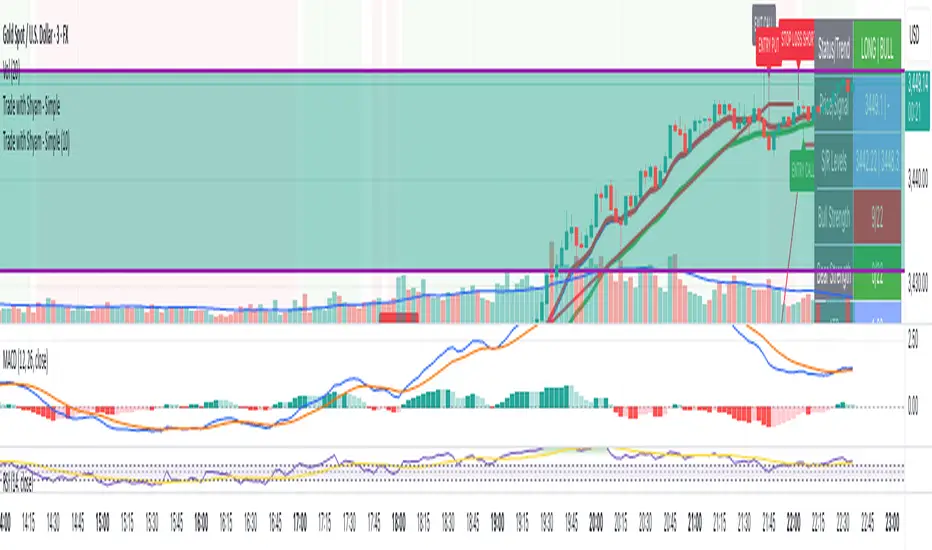
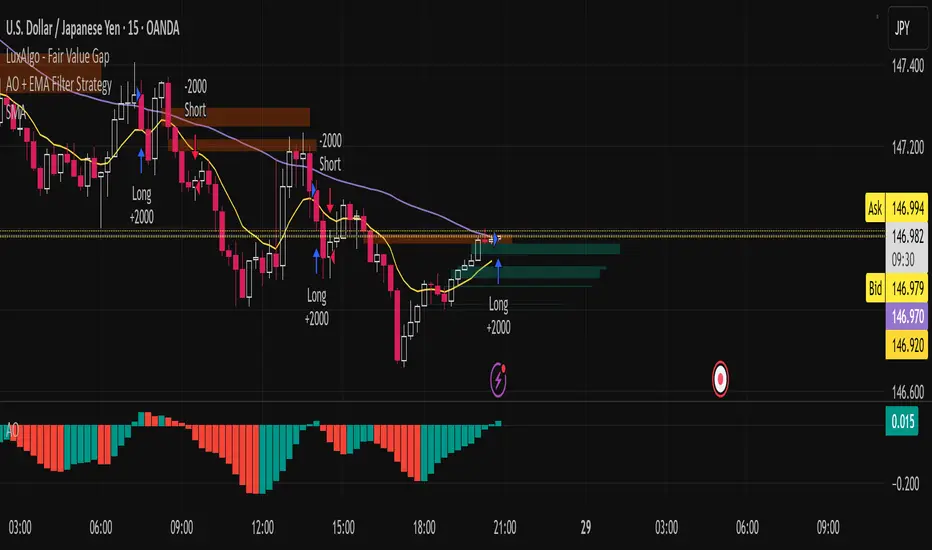
Trade with Shyam - SimpleStrategy Overview
This is a trend-following strategy that uses two Exponential Moving Averages (EMAs) to identify trading opportunities in the market. The strategy generates buy and sell signals based on the relationship between price and the EMA lines.
How It Works
Entry Signals
ENTRY CALL (Green): Generated when the complete candle closes above the EMA 9 (candle low > EMA 9)
ENTRY PUT (Red): Generated when the complete candle closes below the EMA 9 (candle high < EMA 9)
Exit Signals
EXIT CALL (Gray): Triggered when price closes below the EMA 21 (candle high < EMA 21)
EXIT PUT (Gray): Triggered when price closes above the EMA 21 (candle low > EMA 21)
Visual Components
Red Line (Thickness 3): EMA 9 - Short-term trend indicator
Green Line (Thickness 3): EMA 21 - Medium-term trend indicator
Green Triangles: Buy entry signals
Red Triangles: Sell entry signals
Gray X Marks: Exit signals
Background Coloring:
Light green: Currently in a long position
Light red: Currently in a short position
Strategy Logic
Buy Signal: When price shows strength by closing completely above the EMA 9
Sell Signal: When price shows weakness by closing completely below the EMA 9
Exit Long: When price weakness pulls back below EMA 21
Exit Short: When price strength pushes back above EMA 21
Key Features
Trend Following: Captures momentum in the direction of the trend
Dual EMA System: Uses faster EMA (9) for entries and slower EMA (21) for exits
Complete Candle Confirmation: Only triggers signals after full candle confirmation
Position Management: Maintains only one position at a time (no simultaneous long/short)
Visual Clarity: Clear labels and color coding for easy interpretation
Best Usage Conditions
Trending Markets: Works best in markets with clear directional bias
Moderate to High Volatility: Provides better signal quality in active markets
Multiple Timeframes: Can be used on any timeframe (15min, 1H, 4H, Daily recommended)
Risk Management Notes
The strategy uses the EMA 21 as a dynamic stop-loss level
Position sizing and additional risk management should be implemented separately
Past performance does not guarantee future results
Customization
You can adjust the EMA periods in the indicator settings to suit your trading style:
Shorter periods: More sensitive, more signals (higher frequency)
Longer periods: Less sensitive, fewer but potentially higher quality signals
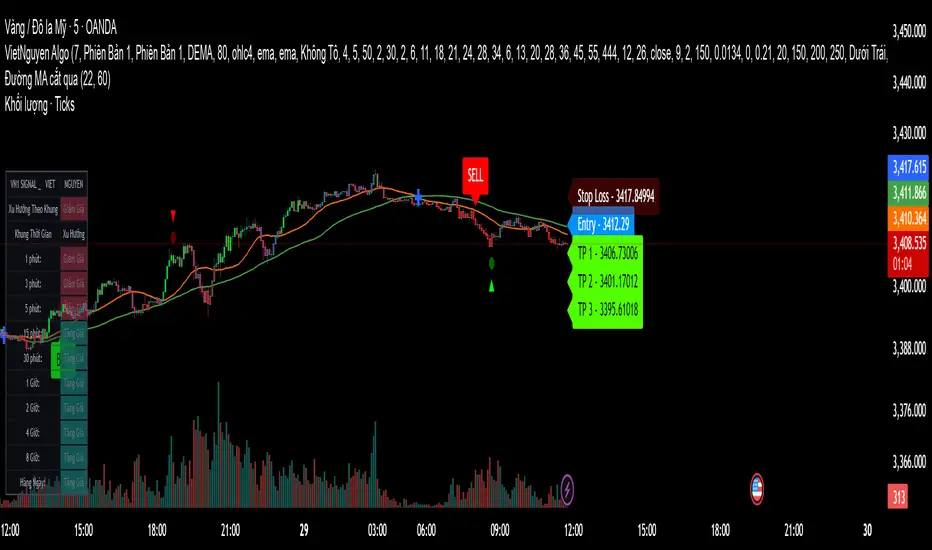
🎯 Super MA Arrows with Trend Bands🎯 Core Structure of the Indicator
1. Input Parameters Configuration
One of the most comprehensive indicators, featuring 50+ configurable variables, categorized into:
MA Settings: Define MA types and periods
Signal Settings: Customize signal conditions
Display Settings: Manage visual outputs
AI Settings: Enable/disable learning module
Multi-Timeframe Settings: Analyze across multiple timeframes
2. Moving Average & Envelope Calculations
The indicator employs multiple moving averages and an adaptive envelope:
Fast MA: Captures short-term movement (default: 9)
Slow MA: Reflects overall trend direction (default: 21)
Filter MA: Filters market noise (default: 50)
Envelope: Auto-adjusting support/resistance zones
3. Market Structure Analysis
Purpose: Confirm the market’s directional bias by evaluating swing highs/lows, breakouts, and consolidation zones.
